Why Is the James Webb Space Telescope Mirror Made of Hexagons?
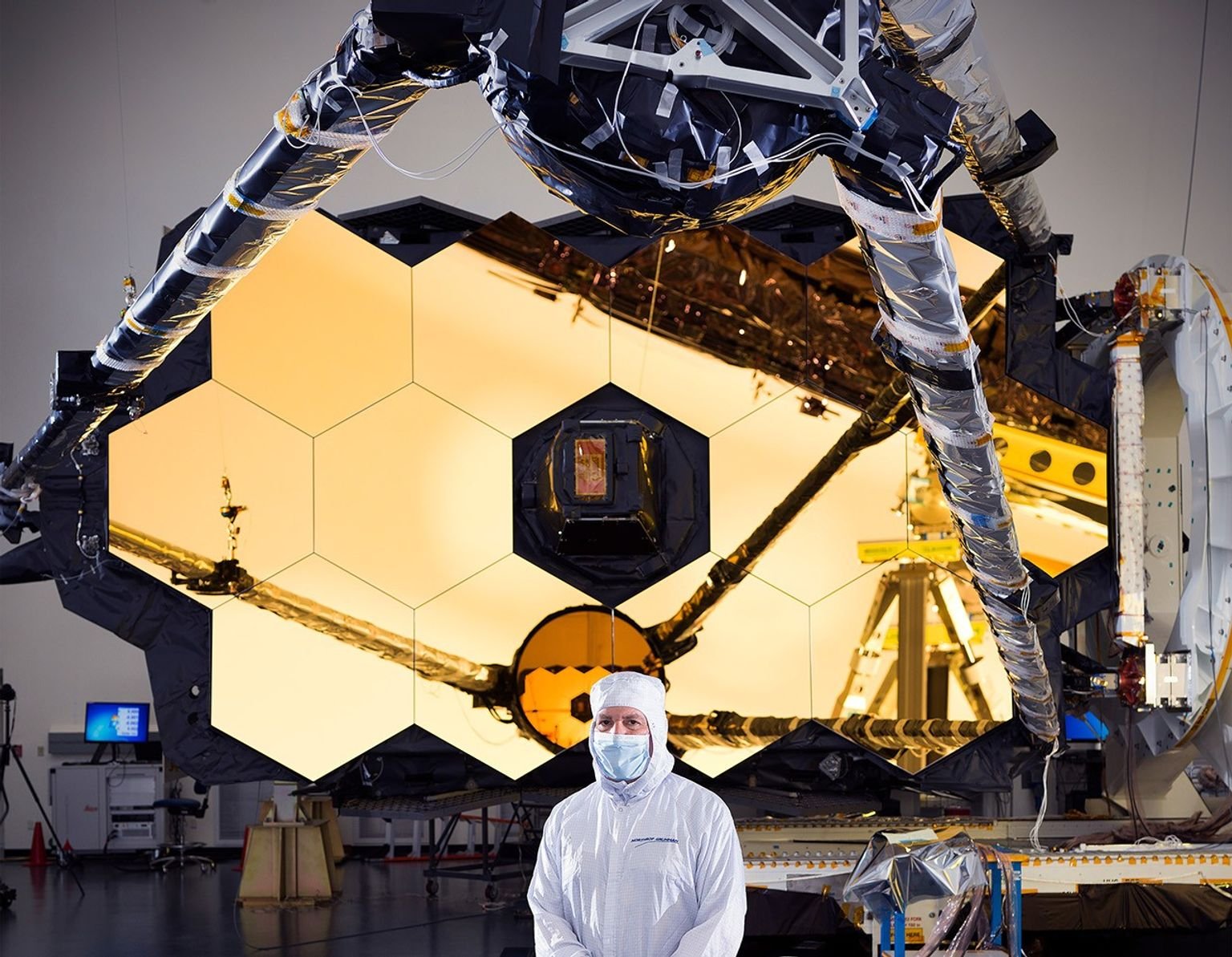
Lee Feinberg, who has recently been awarded the SPIE 2026 George W. Goddard Award in Space and Airborne Optics
One of the things that makes the James Webb Space Telescope's (JWST) stand out is its mirror. The gold hexagons make the telescope instantly recognizable. But why did NASA make the mirror like that? Why not just make a regular mirror, like in a lot of telescopes we see on Earth?
First, let's talk about how reflecting telescopes, like the JWST, work.
Reflecting (or reflector) telescopes have a series of mirrors that reflect light from a distant object to the viewer's eye or a camera. Usually there are two mirrors, a primary mirror which is the larger curved mirror the light hits first, and then a secondary mirror, which is often tilted at an angle to reflect the light from the primary mirror to the eyepiece of the telescope.
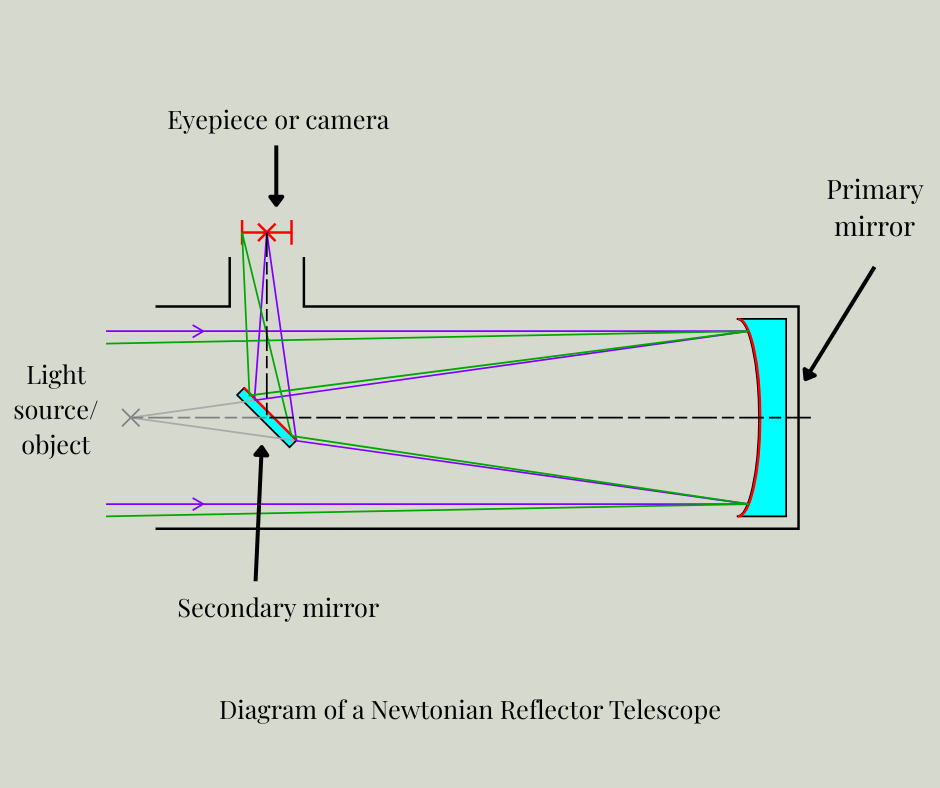
Diagram by Krishnavedala, labeled by Melanie Meadors
There are different types of reflecting telescopes, which reflect light in different ways, sometimes with multiple mirrors, but they all basically work this way, reflecting light from a distant object to the eye/camera. If we want to look at an object like a bird on Earth, we only need a small mirror, which makes for a small telescope. If we want to look at craters on the Moon, again, a smaller telescope will work fine for that. But what if we want to look really far away, at distant galaxies that we can't see with our eyes at all? Well, we'd need a bigger primary mirror in order to capture enough light to see the distant object. The further or fainter the object, the bigger the mirror needs to be, which means the bigger the telescope needs to be.
You can imagine that really, really big mirrors will be very heavy, not to mention hard to transport because of its size. The primary mirror on the JWST is 6.5 meters, or 21.3 feet. These mirrors go through a series of processes when they are made, from the original cutting to grinding to coating and polishing. Not all these things happen at the same facility. Different people and factories have expertise in doing the work. So the mirrors are transported from one place to another. Can you image a truck or a train trying to transport a mirror that is as big around as the Wright Flier plane? It would take up over two lanes of a highway. It would be way too massive to fit any rocket that could launch it to its orbit in space. But transport isn't the only problem.
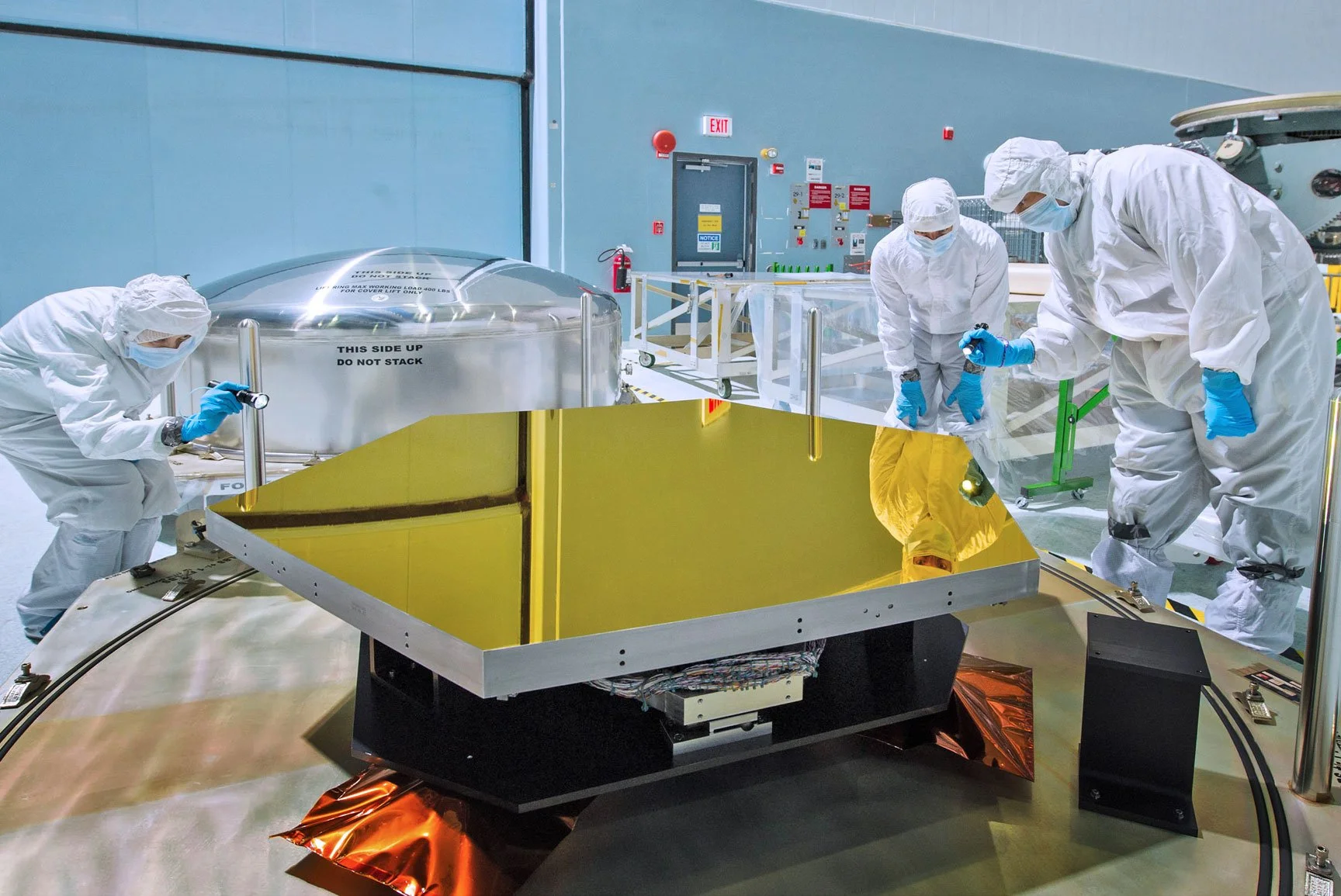
NASA technicians examining a mirror panel from the James Webb Space Telescope
The process of making a mirror that is 6.5 meters wide is extremely expensive. The cutting, grinding, polishing, and coating needs to be extremely precise, and the technology--the machinery, the processes at this scale--needed to make a mirror this massive just doesn't exist. The risks involved with moving such a large mirror are also huge. Any scratch or ding would compromise the mission. The engineers at NASA would need to figure something else out.
Primary mirrors made of hexagonal tiles aren't a new thing. The Keck Telescope in Hawaii has a tiled mirror, and it was built in the 1990s. The hexagonal tiles are able to fit together like a bee's honeycomb, with minimal gap between them. Put together, they can create a natural curve like that of a traditional primary lens. Most importantly, they can be transported much more easily, and production is far more efficient as well. For the JWST, each mirror tile is 1.32 meters across, or 4.3 feet. This is a much easier size to work with for everything from production to transport.
The hexagonal mirrors solved one problem, but created another. How would NASA assemble the mirror tiles into a single 6.5 meter unit once they were in space? For that, engineers came up with an ingenious way of "folding" the tile structure like a drop-leaf table so it could fit in the rocket payload while it was being launched. Then, when it reached its target orbit, the JWST would unfold the side wings to make one unit. On the back of each mirror tile, there are mechanisms that allow NASA scientists on Earth to shift their position to make sure everything is lined up just right.
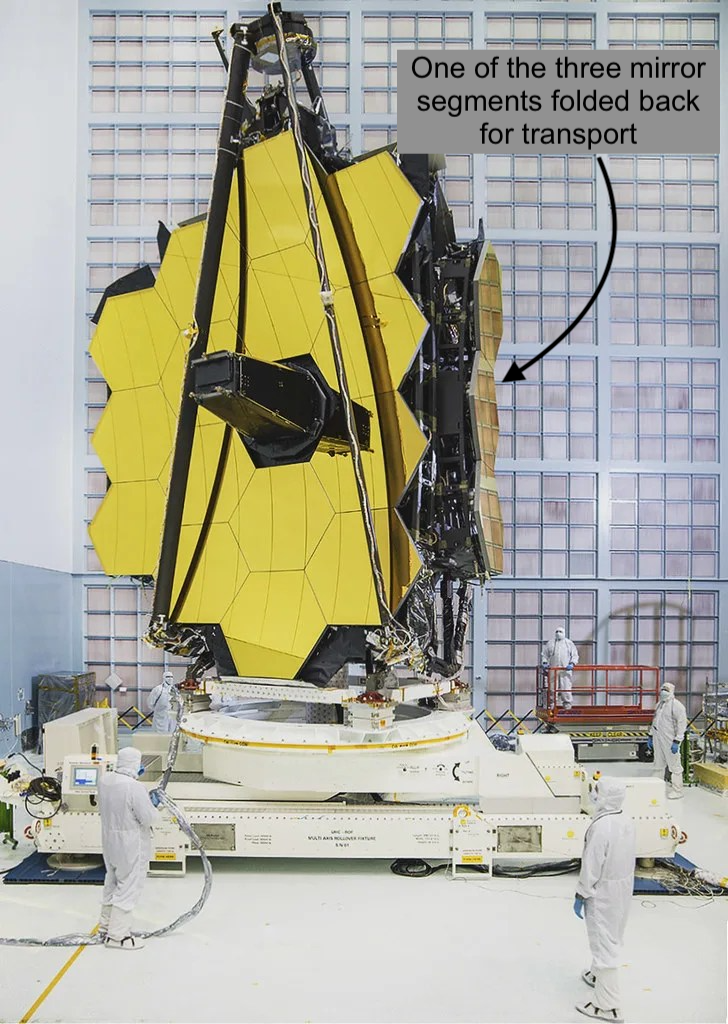
Image: NASA/Chris Gunn; annotated by Melanie Meadors
As we've seen from the beautiful images the JWST has sent back, as well as the information that scientists are working with and the breakthroughs that have already happened, this mirror design has proven more than successful. And we'll be able to see this mirror technology in use again at the Extremely Large Telescope in the Atacama Desert in Chile, where hexagonal tiles will come together to make a mirror a whopping 39.3 meter or 130 foot primary mirror! This telescope is planned to be complete in 2028.
Unlike the simple telescope in our Newtonian example above, the JWST has four different mirrors. The primary (hexagon tiles) will capture the light from the target source. Then the secondary will reflect that light onto a third, or tertiary mirror. From there, the light will reflect into a fourth mirror, called the steering mirror. The steering mirror will reflect the light into the JWST's instruments to send information back to Earth.
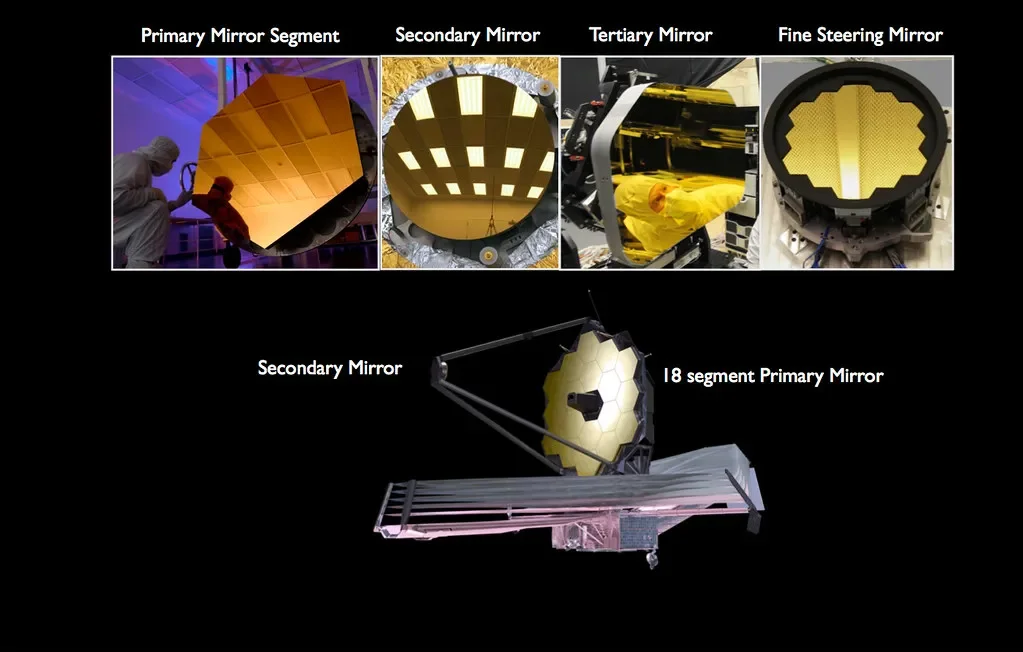
The mirrors of the JWST. Image: NASA/Ball Aerospace/Tinsley
The James Webb Space Telescope has been collecting data for about four years now, and is expected to keep doing so for at least another few years if nothing goes wrong. It's showing us things in our universe we never thought possible, and hopefully the best is yet to come.
I am currently fundraising to buy a projector system to help me with my public presentations at libraries and other venues. I've had issues with compatibility in the past, making for some unfortunate surprises, and I would love for that to be a thing of the past. If you would like to contribute to this fund, please visit my Ko-fi page. All funds from my Patreon will be going toward this as well.