Sometimes Scientists Get Things Wrong
But that’s just how science works!
Have you ever asked a question, looked into it a bit, asked your friends, came to a conclusion…and then a few years later realized you were wrong? But that’s what happens when you are curious and ask questions—you find an answer that is good enough at the time, or as good as you can get at the time with the information or resources that you have. Then when you get better resources—a more up-to-date book, a person who understands the topic better, or better tools like a more powerful telescope—you find a better answer, or a completely different answer! And this isn’t bad. This is actually good, because when you get better answers, it means you are getting closer and closer to understanding the world and maybe getting the right answer some day.
NASA; annotated by Melanie R. Meadors
Well, this happens in science, too. It actually happens a lot. And scientists (well, most of them, anyway) accept it as just part of their job. When they are wrong, it’s actually a good thing, because it means they can cross something off and move on to the next possibility. They are getting closer to the right answer.
Last week I wrote an article that was based on a talk I have given a few times about Europa. In it, there was a part that I thought was pretty cool: in the earlier 2000s, the Hubble Space Telescope sent back an image that scientists thought were ice plumes like we had observed before on Saturn’s moon Enceladus. They ran spectral analysis on the data from Hubble and saw the hallmarks of hydrogen, the H in H2O (water), supporting their idea. They compared this information with older data from the Galileo mission in the 1990’s, found a warmer spot on Europa’s surface, and thought that this was pretty conclusive evidence for icy geysers that shot water into space from Europa’s surface. In fact, scientists gave it a 99.9% certainty rate. Since 2014, we have believed that there are these icy plumes shooting up from Europa based on the best evidence we had. We had no reason to think otherwise!
But, just last week, days after my article went on up Substack, something happened. A new scientific article came out saying that now, scientists weren’t so sure about these ice geysers. What happened?
Well, every year we get better and better at things. Think about how much better you get after practicing something for a long time, like riding your bike, knitting, or reading. Well, scientists get better at their jobs as well. And it’s not because they weren’t smart before. It’s because they get better equipment that takes better readings, which leads to more accurate science. In the case of Europa, scientists learned more about not only that moon itself, but about Earth’s atmosphere since the time they thought they saw plumes, as well as more about how Hubble “sees” things. And this made them rethink what they recorded.
Scientists did indeed measure hydrogen around Europa when they thought they saw a plume, but the problem is, they didn’t realize at the time that Europa has a hydrogen exophere—something that acts like an atmosphere but is thinner and changeable. This exosphere exists because radiation from the planet Jupiter smashes into the icy crust of Europa and breaks apart the ice into molecules, hydrogen and oxygen. Because hydrogen is so light, some of it rises up around Europa, making that exosphere. Now, when Hubble sends back an “image” of Europa, it’s not a pretty picture like we see here:
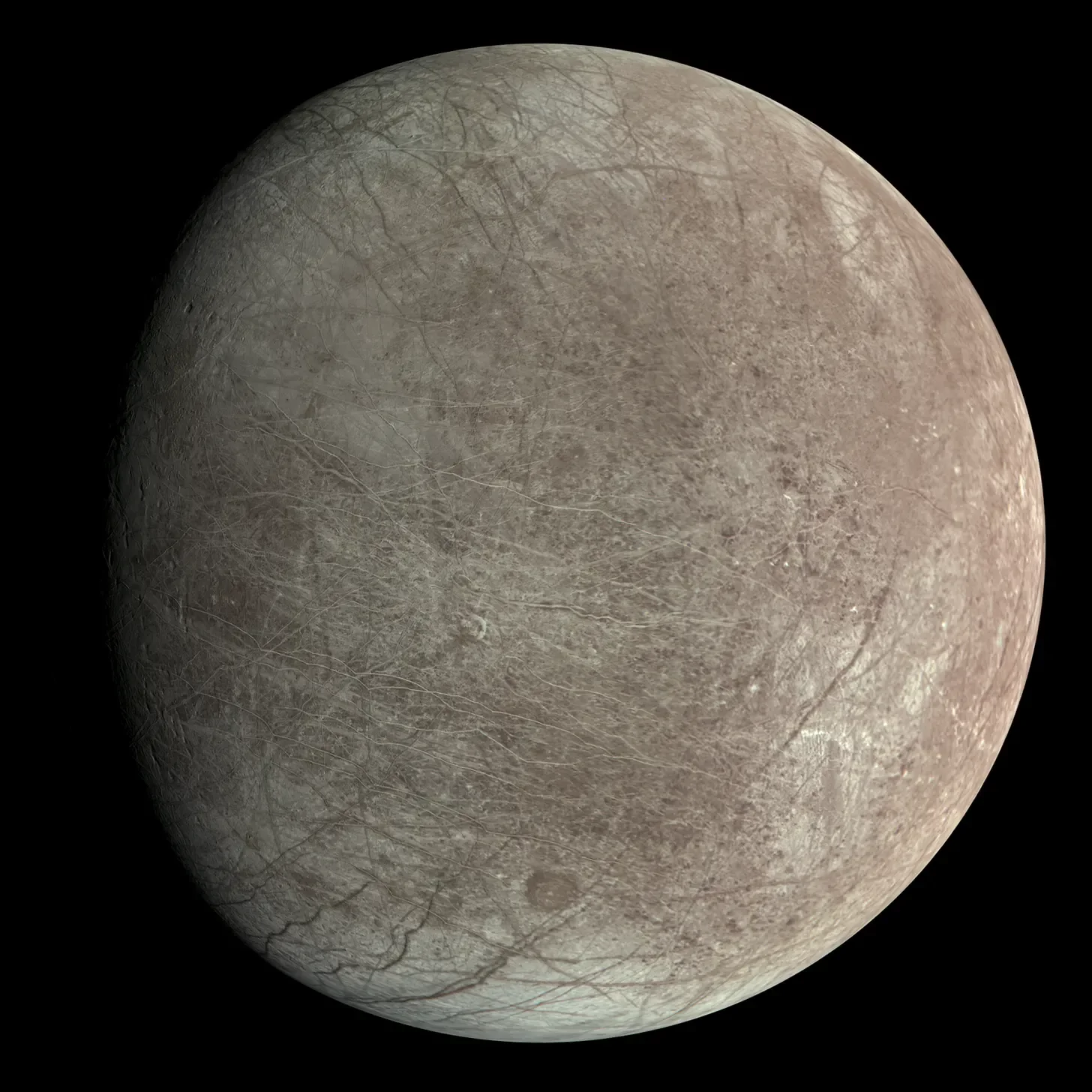
NASA
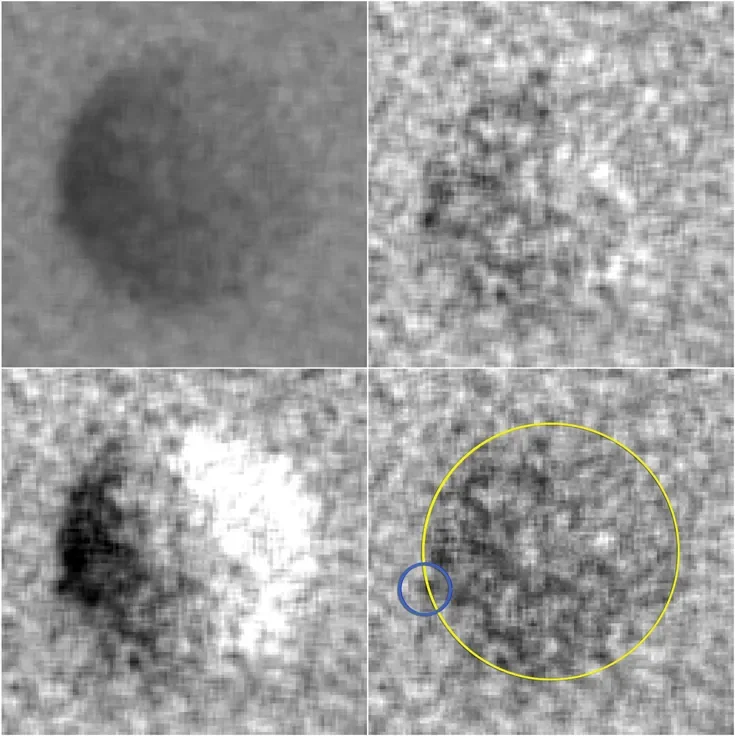
It’s more like this:
Sparks et al., 2016
The yellow circle there is outlining where scientists place Europa in that fuzz, and the blue circle is where they measured what they thought was a plume. The problem comes because if scientists are even ONE pixel off as far as where Europa is in that picture…all the data becomes fuzzy. So, that’s the problem with Europa data.
Recently, scientists have ALSO been learning more about Earth’s atmosphere, and how far hydrogen (again, the lightest element there is!) floats above the Earth in orbit around the planet. They’ve found that there is just enough hydrogen in orbit near the Hubble Space Telescope to cause a tiny bit of possible interference in Hubble’s images. This means that some of the fuzziness we are seeing in the above image of Europa could actually be from right near Hubble. And since we are looking at a scale of single pixels, that’s a big deal in terms of data and uncertainty. Couple that with the uncertainty of Europa’s exact location in the images and the existence of hydrogen from other sources, and the certainty level of the existence of water plumes from Europa goes from 99.99% to something less than 90%. In science, that is just not enough to say that something exists for sure.
Now, does this mean that there aren’t plumes on Europa? No. Does it mean that what the images from the previous studies showed weren’t plumes? Nope. There could well be plumes on Europa, and the images from Hubble could still be showing the plumes. What the new data shows, though, is that we can’t be POSITIVE they are plumes. They might be plumes, but they might also be “noise” from random hydrogen on Europa and from Earth. This isn’t BAD—remember, questions lead to answers, and this finding opens up more questions. This is actually GOOD news, because it means we aren’t believing in data that might be wrong.
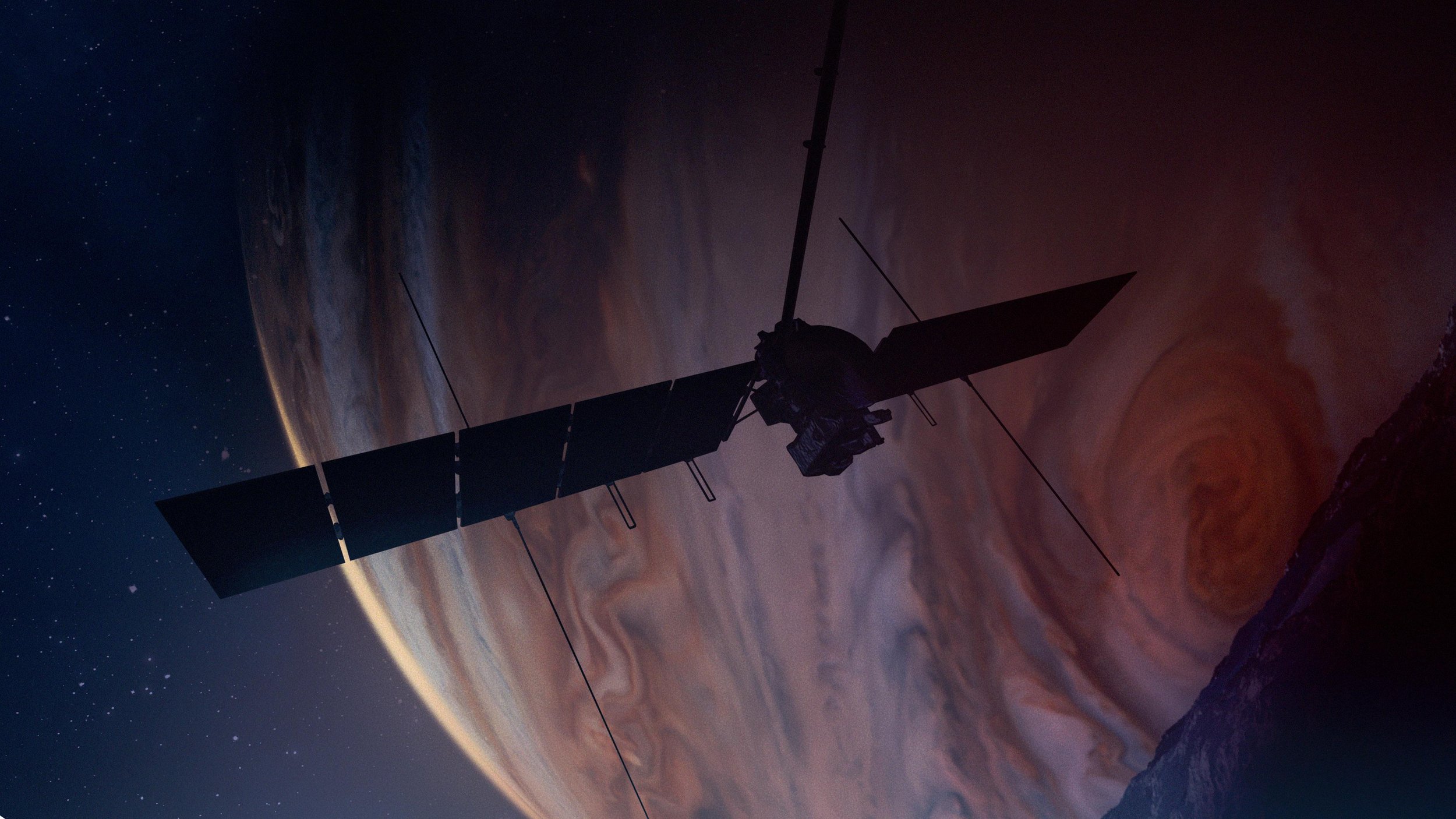
The even better news? We have a spacecraft on its way to Europa that will help us find out the answer to this question! See? Better equipment, better data! The Europa Clipper launched in 2024, and will arrive at the Jupiter system to specifically study Europa in 2030. Over the course of two and a half years, the Europa Clipper will fly closely by Europa 49 times so we can learn as much about it as possible.
NASA/JPL-Caltech
Our guesses may soon become facts, or we will develop new, more accurate ideas based on new questions the mission brings up. But now that we know we aren’t certain about Europa’s plumes, we know what we should focus on once the Europa Clipper arrives. If we thought we knew something for sure and went in with a wrong idea, it would take us longer to come to the right answer, wasting valuable mission time!
So, the lesson is, even being wrong can be right sometimes!
Except, that is, when it comes to sneaking monkey chow.
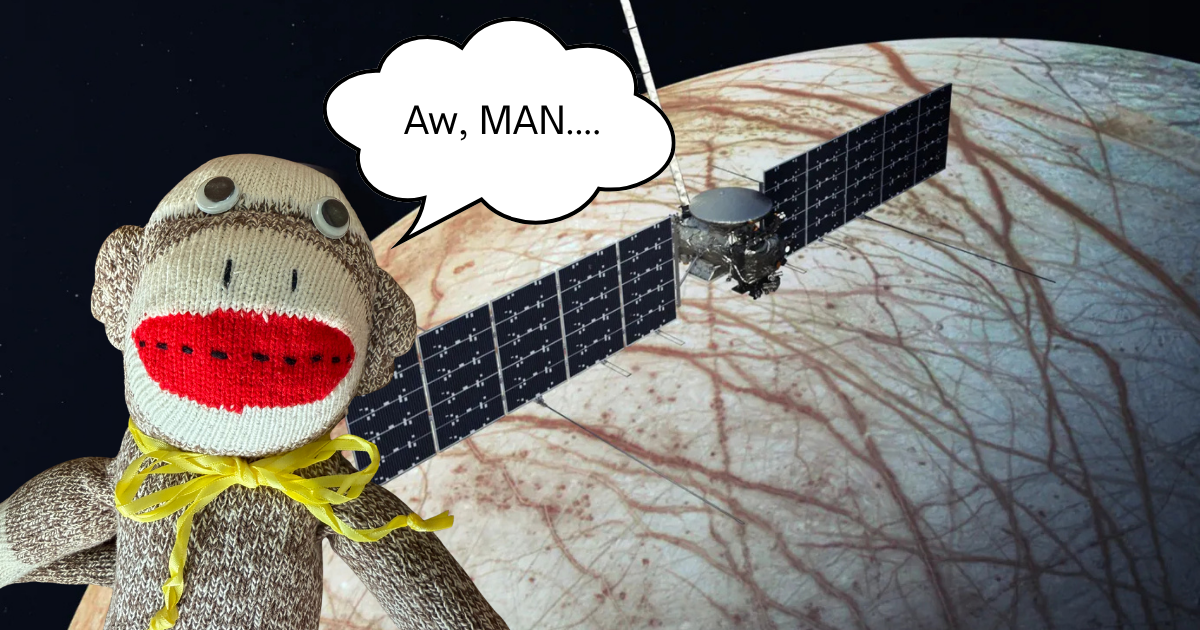
NASA/Melanie R. Meadors