Mars Perseverance Rover Finds Potential Life Signs
Humans have been looking for the possibility of life on Mars since it became clear that the red speck traveling across the night sky was another world like Earth. Percival Lowell thought Martian-built canals criss-crossed the planet. Classic science fiction authors like Jules Verne, Edgar Rice Burroughs, Ray Bradbury, and beyond dreamed up civilizations on the Red Planet. We’ve visited Mars via spacecraft and rovers more than any other planet, but we’ve never found any definitive proof that any life ever existed on Mars. Until...now?
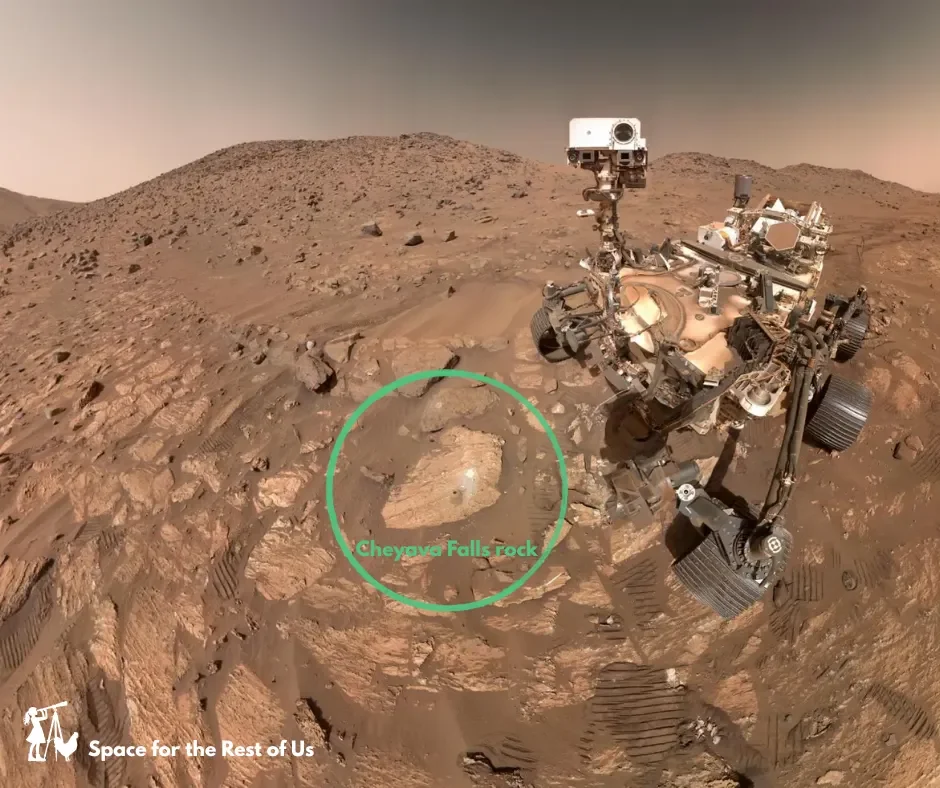
On July 21, 2024, the Mars Perseverance rover took a picture of a rock that had scientists quite excited. The rock is in Neretva Vallis, the ancient river bed that is thought to have once fed the hypothetical lake in Jezero Crater, the landing spot of Perseverance. River beds and deltas are notorious places on Earth for finding signs of life, both past and present, and there is no reason to think this would be any different on Mars. This is one of the main reasons NASA specialists chose this area for Perseverance to study. Detecting “potential biosignatures,” signs that point to the possibility that life once existed in an area, is one of the mission’s main priorities, so the rover has specialized equipment to analyze for these things. The rock in question, called Cheyava Falls, had tiny dark spots on it which looked similar to markings found on Earth rocks in similar environments. On Earth, these markings are often the result of chemical reactions caused by living things. But this rock isn’t on Earth. It’s here, on Mars:
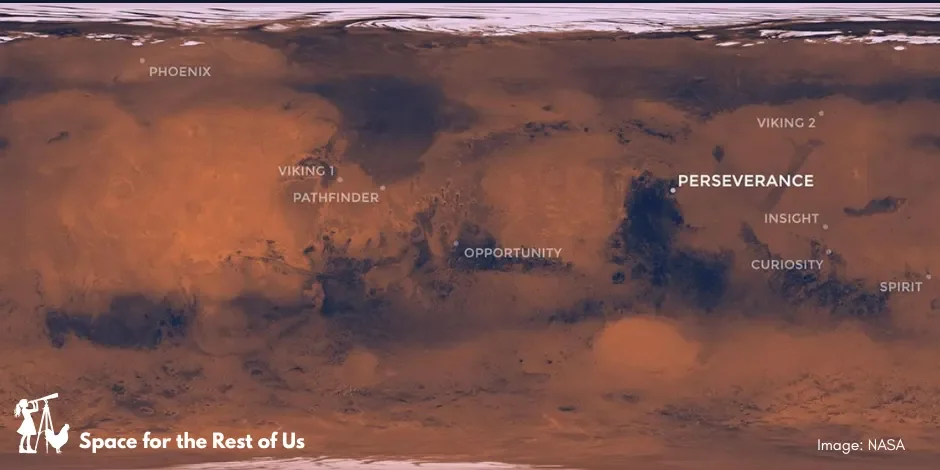
Map of Mars

Map of Perseverance landing and exploration sites
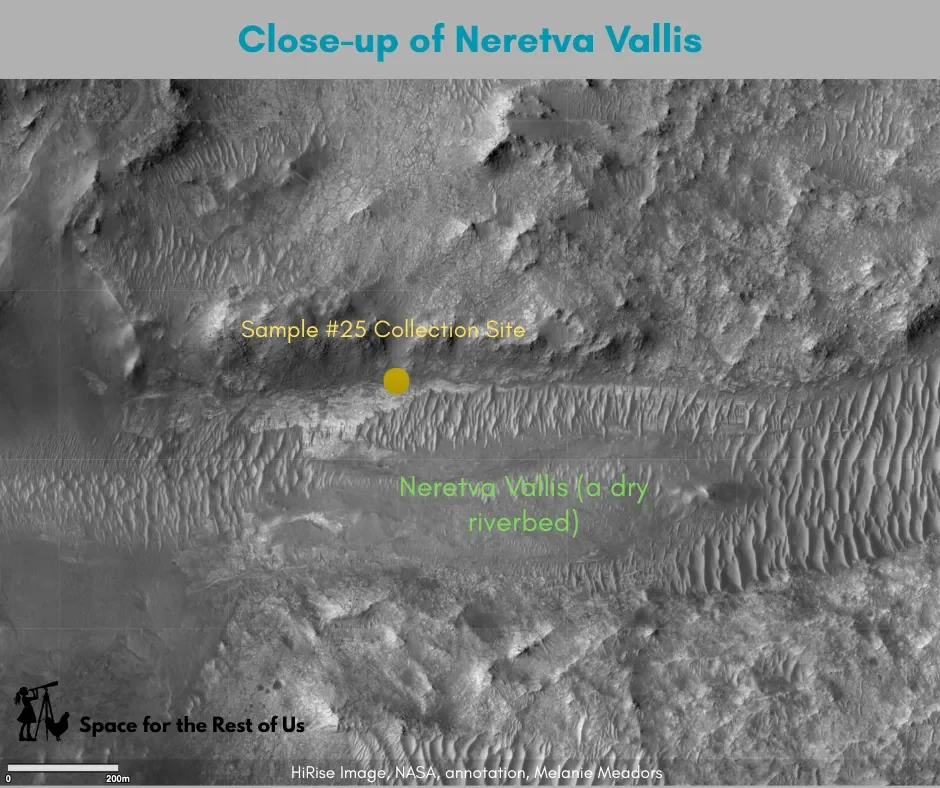
Map marking spot of Cheyava Falls rock finding and sampling
Now, scientists can’t just jump up and say, “Holy cow! We’ve found signs of life on Mars!” First of all, if these spots are indeed analogous to those on Earth (in other words, the Mars version of the same process as on Earth), they are most likely from long, long ago, from when there was still liquid water on the Martian surface. Whatever caused those marks is likely not still alive. No one wants to cause a panic—the news would need to be handled carefully so that there aren’t misconceptions and confusion about what was found. Second of all, scientists weren’t positive about what Perseverance found, and they might not be for a very long time yet. So, let’s back up and look at exactly what Perseverance found and what it might mean.
Many of us had to memorize the scientific method at some point in our schooling adventures, and there was a good reason for that, though perhaps we all didn’t understand it at the time. Scientists (and people in many other fields) actually DO use this method to answer questions. Here’s a refresher in case you forgot it, or in case your school didn’t cover it:

NASA scientists and others used the scientific method to come up with Perseverance’s mission objectives and a landing site that would give them the greatest chance of accomplishing those goals (you can read more about that in my article here). Now, what you might not have learned in school is that there can be multiple levels of the scientific method within one project. In this case, we have the overall Perseverance mission, the landing site, the goals, the actual observations of the rover, etc. When Perseverance showed us those dark spots on the rock, it started a new round of scientific questioning within the larger scope of its mission. What were those dark spots?
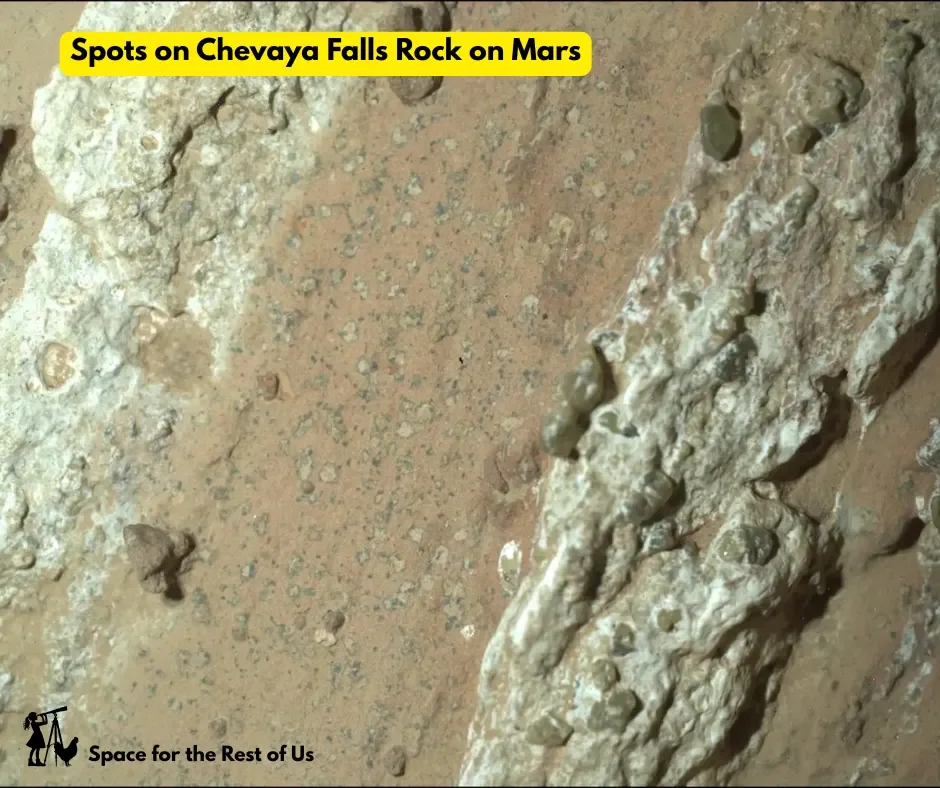
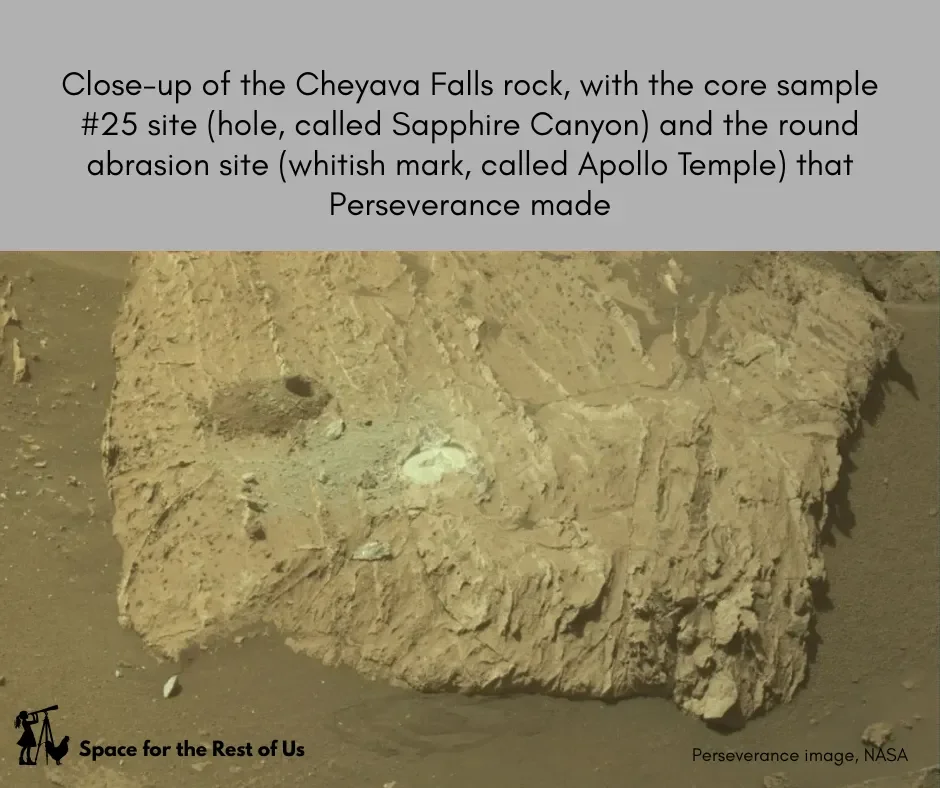
Scientist Joel A. Hurowitz and his team thought the spots, which they called “leopard spots,” looked a lot like the spots on similar rocks on Earth, so they started the process of scientific examination. They put the rover to work, using its many scientific instruments to gather information. The rover scraped the rock to see what was under the surface, and it drilled a hole to get a sample of the rock, sample #25 called Sapphire Canyon. It also used its scanners and special instruments to find out what the rock was made of, and what the composition of the spots might be. They found that the rock, which they named “Cheyava Falls,” was made of silt, clay, and fine-grained mudstone, just like what they would expect to find in a dried river bed. But they also found that the rock was rich in organic carbon, sulfur, oxidized iron (rust), and phosphorous—all things that are present on Earth in places that have microbial life.
“The combination of chemical compounds we found…could have been a rich source of energy for microbial metabolisms,” Hurowitz, a geoscientist at Stony Brook University said. “But just because we saw all these compelling chemical signatures in the data didn’t mean we had a potential biosignature. We needed to analyze what that data could mean.”
In other words, his team had to analyze the data and think about all the other possible explanations for the chemicals. Then they would need to see if they could rule any of those things out. Only after they ruled the other explanations out could they say “these might point to life.” Iron phosphate and iron sulfide minerals like those observed by Perseverance can be created by what are called “redox reactions” involving organic carbon, and occur after mud and silt are deposited by a river. But these chemicals can be made in ways that don’t involve life as well as those that do, and the team of scientists had to rule those other ways out before they could draw any conclusions.
First, they determined that the iron phosphate spots—the leopard spots—were formed after the mud that formed the rock itself was deposited by the river. They could see that the spots were on the rock. Rather than being incorporated into the grains of mud that made the rock itself, the reactions that caused the markings happened “in situ”—in the place they were observed on the surface of the rock. So the scientists asked themselves what abiotic reactions, reactions that did not involve life, could have caused these spots at the low temperatures they seemed to have happened in?
One abiotic process that could explain the reaction involves a mineral called pyrite. If pyrite is rusted by iron and water, it could result in the chemicals found at the Mars site. But after analyzing the site more, scientists didn’t find any pyrite around.
Another process involved high temperatures that would have required magma or a hydrothermal event (think geysers or hot springs) interacting with the deposited stone, because those events produce sulfide gas that could leave a deposit on stone. But there is no evidence for any kind of hydrothermal or magmatic situations near the formation. And in order for the reactions involving sulfide to happen, there would need to be intense heat. There is no evidence that anything heated the rocks in the area to the temperatures that would have been necessary for the reactions to take place that way.
Without these explanations for the chemical reactions that made the leopard spots, scientists did see that a biological cause may indeed have been responsible. They referred to these same markings on rocks on Earth that are created at low temperatures by microbial life in sites with water long ago. These spots are considered evidence for some of the earliest life on Earth. The scientists working on this project are using these very similar conditions on Mars to propose that the same thing was possible on the Red Planet. The problem with this hypothesis, though, is that scientists—many different teams of scientists—would have to be able to examine the rock in person to confirm it.
There was good news on this front. A mission called the Mars Sample Return was planned to launch this summer in order to bring the samples collected by the Perseverance Rover back to Earth. It would have been a partnership between NASA and the European Space Agency and would have been a two part mission, one to collect the samples and put them in Martian orbit, and the other to collect them from orbit and bring them home. This mission is in severe jeopardy, however, because the White House recently declared it wanted to kill the program, and with the support of the conservative congress, it is pretty much a done deal. This is extremely unfortunate, especially in light of the new, possibly world-changing, discoveries Perseverance is making. Such discoveries could put the United States back into the forefront of space science. While we can try to replicate Martian conditions or try to find more evidence on Earth that is like that on Mars, there is no true way to confirm what the rocks on Mars could tell us without having them in hand.
“Ultimately, the return of the samples from Mars for study on Earth…would provide the best opportunity to understand the processes that gave rise to the unique features described here,” Dr. Hurowitz and his colleagues state in their paper about this discovery. Sadly, in addition to the cut of the Mars Sample Return mission, the White House has also announced an avalanche of other funding cuts for science in the next year.
If you don’t agree with these funding cuts, which are crippling programs and missions across the board, there are a few things you can do:

Part of science is being comfortable with saying, “We don’t know.” But another, equally important part of science is saying, “But let’s try to find out!” and being curious enough to explore. I know I’d like to find out if life existed on Mars, especially since we have this clue practically in our hands. Wouldn’t you?