Child Abandonment in Ancient Rome
Many of us learned that in ancient Rome, it was common practice to "expose" unwanted babies. Generally, our teachers explained that Romans valued boy babies over girls, and the way they taught it, exposure meant certain death in most cases. A lot of things we learned in high school were greatly simplified, however, and historians and archaeologists have learned a lot more about the ancient Roman world since I was in school. So how prevalent was child exposure, and why did ancient Romans do it?
As usual, it's a bit complicated.
There are many sources from Ancient Rome that classicists, historians, and archaeologists have examined to learn more about child exposure. Who did it and why? Where did people leave these children, and what happened to them? By looking at different types of sources, researchers can recreate a picture that is fairly comprehensive. These sources include not only letters, laws, political documents, philosophical treatises, and the like, but also fictional works, monument inscriptions, grave sites, ledgers, and more. What they found was that the practice of exposure transcended class. Both rich and poor people exposed children for different reasons. And while previous hypotheses stated it was done to limit family size, studies have shown that abortion and birth control were common, accepted, and successful in ancient Rome, albeit not without risk. So we know there is more to it than that.
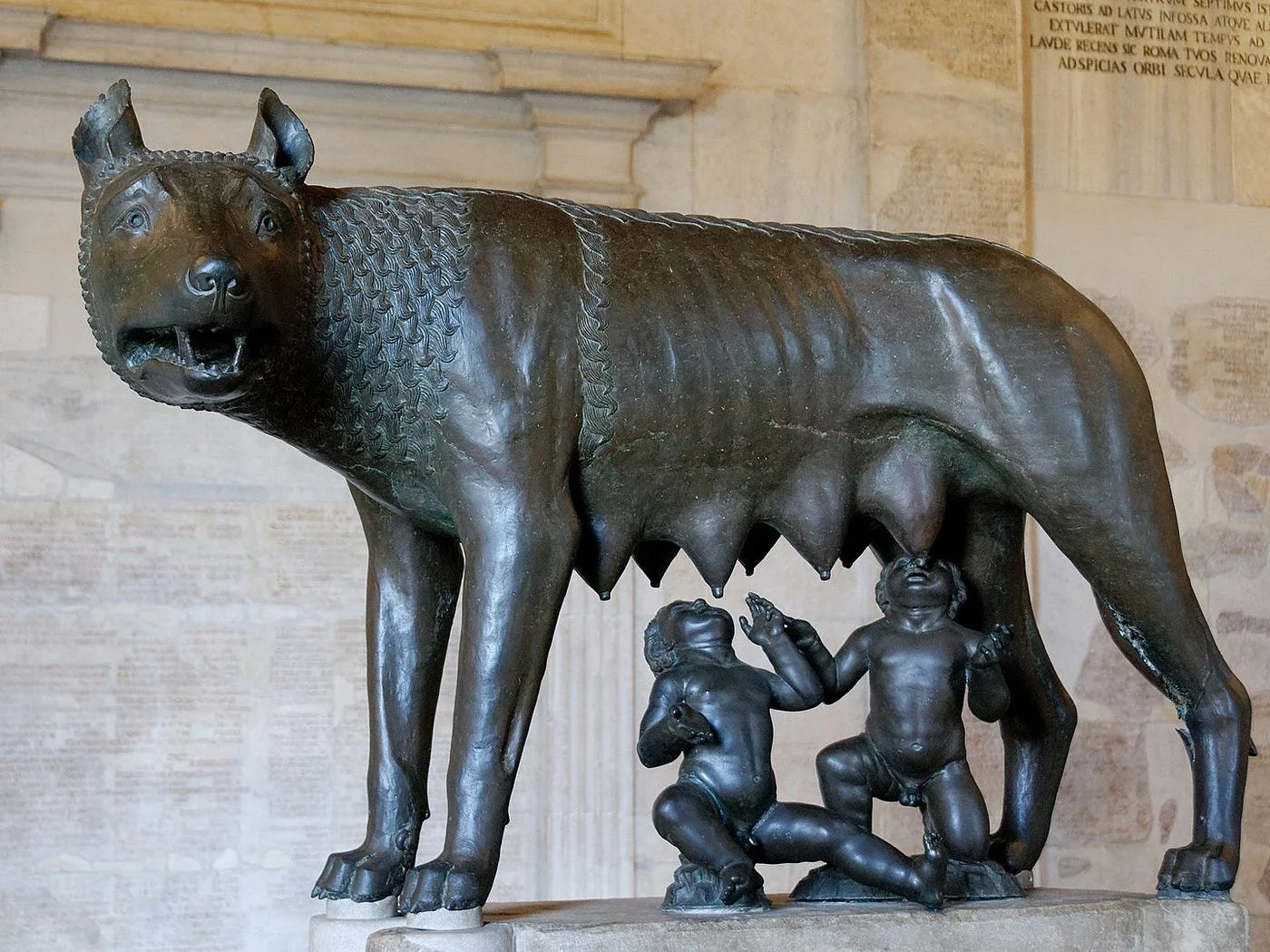
Ancient Rome was founded on a myth of abandoned children
One reason Romans exposed children was indeed to limit family sizes. The poor would have had to decide if their family could afford to feed another person without the rest starving. The rich might want to retain their wealth and not spend more on children than they needed to. Often, when a couple had three children and at least some of them were boys, they no longer wanted more. Abortion had risks which would have been known, and if a family wanted boy for labor or to carry on the family name and reputation, abortion didn't allow for the selection of gender. No one could know at that time if a child would be a girl or boy. Exposing a child after birth allowed the family some choice in the matter. Girls didn't labor as boys did, and could not contribute to the family financially. Girls also required a dowry when they married, to be paid to the new husband. Having more boys than girls made sense to a Roman family.
Even if a poor family had no children, they might opt to abandon their child rather than have it grow up in poverty. The Roman historian Plutarch commented on this in his De amore prolis: "The poor do not bring up their children." He claimed it was because people didn't want to pass on their poverty, and that the children of the poor didn't "grow up well."
When a child was born in an ancient Roman family, there was a ritual called tollere liberos where the child was laid at the father's feet. If the father accepted the child as his to bring up, he picked it up. If he rejected the child, however, for whatever reason--perhaps his wife was unfaithful to him--then the child could potentially have been abandoned. Unwed mothers similarly might have exposed a child to avoid humiliation.
According to Plato in ancient Greece, people of all backgrounds might have exposed children in times of war. This might have been to avoid capture, pestilence, hunger, or perhaps to make the parents' escape more easily. Both Plato and Aristotle agreed that the poor were more likely to do this.
The rich, however, abandoned children for other reasons. Many children were abandoned for religious purposes. An oracle might have declared it a bad time to have children, or perhaps that a child would turn out to be a bad person. If poor omens occurred at the time of a child's birth, their parents might have abandoned them as well. When certain public figures died, people exposed children to show their deep grief to the gods. When Emperor Gaius (Caligula) died, many children were supposedly exposed in reaction.
The relationship between parents might have created a situation that affected a child's fate. If they were fighting or divorcing, they might decide to give up the child. If the child was the result of incest or was illegitimate, its fate might have been the same.
Finally, if parents discovered a child was disfigured or had a disability, they might also have chosen to abandon it. Sometimes it was because they didn't want to become attached to a child who would die anyway, but other times it might have been because of shame or the cost of care. Poor families might have not been willing or able to support a child who could never work.
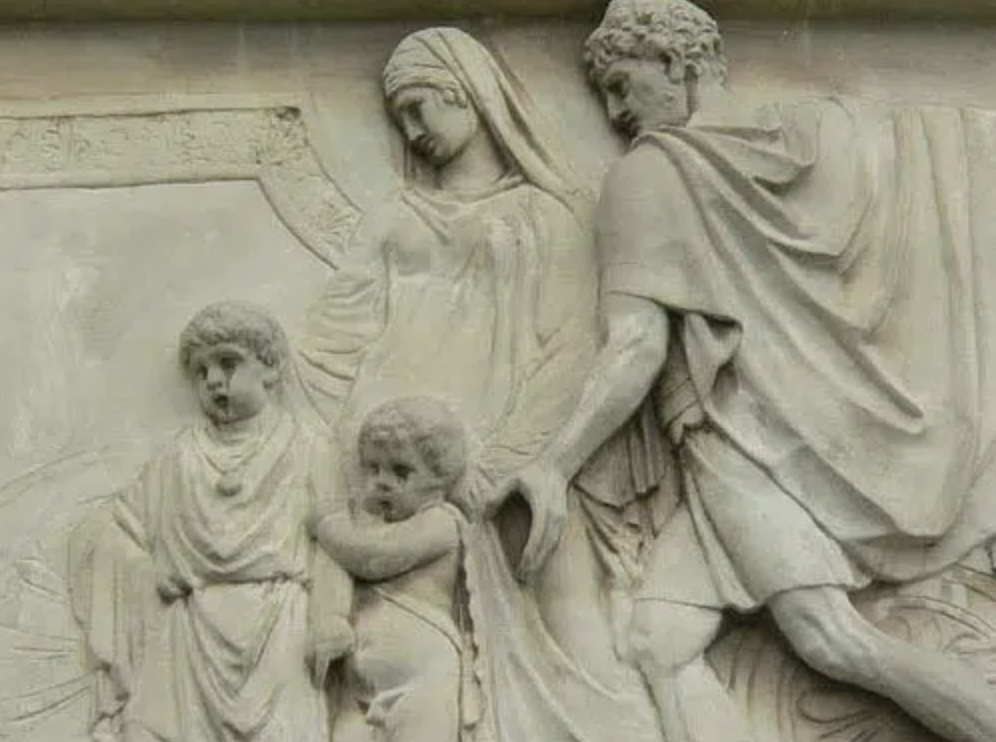
Now, we might think this is completely awful, and in fact, ask why families didn't just kill a baby outright if the result was going to be the same. Why leave the babies out to suffer? Well, the Romans believed that infanticide was a horrid crime, unless a child wasn't viable to begin with. If you are wondering what the difference between exposure and infanticide is, you wouldn't be alone. But this is where we look at where many people left their babies.
Written sources mention that babies were abandoned on doorsteps, public trash piles, the forum, and in a place that was designated for parents to leave unwanted babies called the lactaria. All these places got heavy traffic with lots of people passing by. Why not leave the the babies somewhere out of the city, on a hillside or somewhere remote?
Because the Romans, in many cases, didn't actually want their babies to die. They hoped someone else would come and pick the children up. Exposure was seen as an alternative to infanticide, not just another means to it. Now, let's not paint this with rosy colors. Babies most certainly died due to this practice. Probably many. And the alternatives weren't very appealing, either. Research shows that many, if not most, of the children picked up by others became slaves. Romans who were well off enough to adopt a child usually went through the formal legal process and welcomed a child from a family they knew. Ironically enough, it was poor families who were more likely to pick up a child to raise as their own, especially if it was a boy child who could contribute to the household.
Sometimes parents would leave their babies with tokens; things like rattles, rings, bracelets, or dolls. This wasn't just so the baby would have something. These tokens might have been so that families could identify the child later in life, if the family's situation changed. If a child's birth parents were able to prove a child was theirs, they could reclaim it. Legally, they might be require to reimburse the foster family for the child's upkeep.
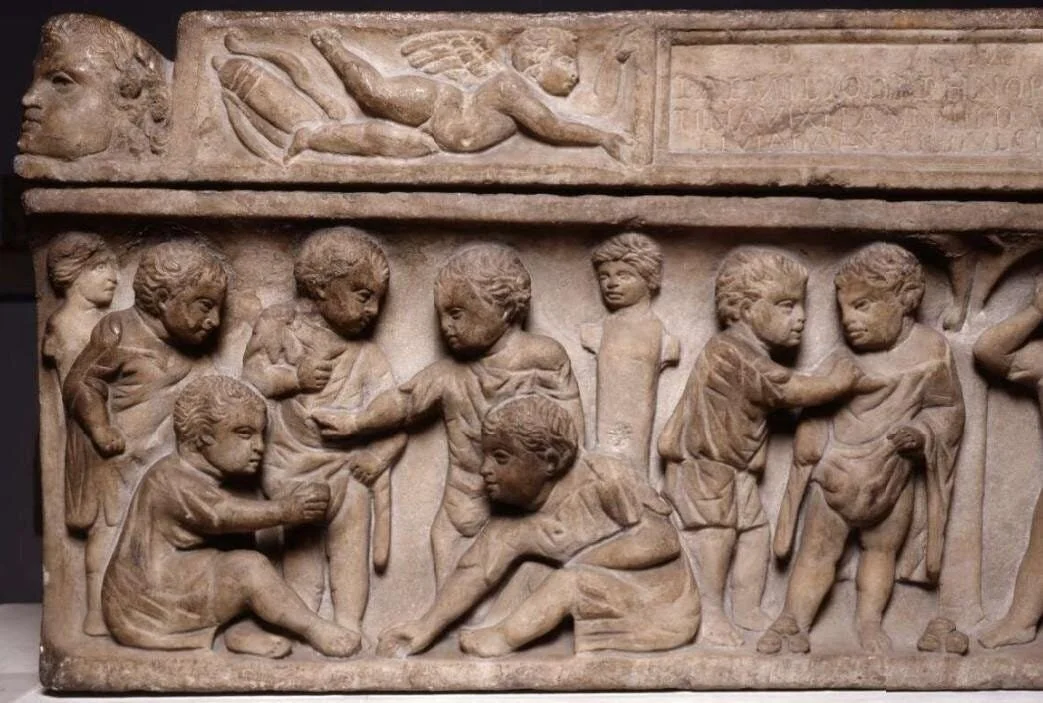
Not everyone found the practice of exposure acceptable, and the later it got in the empire, the less it was seen as a good option. Many people denounced the practice because of the risk of incest. People couldn't be sure a prostitute or even someone they were interested in marrying wasn't related to them. Some people, like the Roman humanitarian Lacantus, thought it was "as wicked to expose children as it is to kill them." Roman reactions to infant exposure ranged from indifference to disgust and even horror. The only law that put any limit on the practice came from Justinian, who declared that all exposed children should be seen as free people and should not be automatically taken as slaves. This removed some of the stigma from foundlings and allowed them to marry who they wished when they grew up. Most Romans saw exposure as a part of life, but many of the people they conquered elsewhere in Europe found the practice barbaric.
The practice of abandoning children lasted beyond antiquity into the medieval age of Europe. Gradually, more people began to bring their unwanted children to monasteries and churches to live a clerical life rather than leaving them out. Even so, there are records even in churches that said that unwed mothers and others still "cast aside" their unwanted children.
The topic of child exposure and abandonment is complex, with many reasons and causes behind the practice. And while many of the children survived, it can't be said their lives were better than if they had stayed with their parents. Many children did indeed die of starvation, illness, or attack by predators. Those who survived often faced a lifetime of enslavement and the risks involved in that.
As similar as ancient Romans could be to us, they still had many differences, and did some things we would consider unfathomable. Yet studying the bad parts of a culture gives us as much perspective as looking at the good parts, and cherry-picking the parts of history we want to believe or study or glorify only leads to ignorance and shallow-mindedness. Ancient Rome is fascinating, but to only see the positive half is to miss half the story.
Further reading:
W.V. Harris: “Child-Exposure in the Roman Empire,” The Journal of Roman Studies, vol 84 (1994), 1-22.
W.V. Harris: “The Roman Father’s Power of Life and Death,” in Studies of Roman Law in Memory of A. Arthur Schiller, ed Roger Shaler Bagnall, Abraham Arthur Schiller, William Vernon Harris, Brill, 1986, 81-95.
John Eastburn Boswell: “Exposito and Oblatio: The Abandonment of Children and the Ancient and Medieval Family,” The American Historical Review, vol. 89, no. 1 (1984), 10-33.
John Eastburn Boswell: The Kindness of Strangers, The University of Chicago Press, 1988.
R. Motomura, “The Practice of Exposing Infants and Its effects on the Development of Slavery in the Ancient World,” in Forms of Control and Subordination in Antiquity, ed. Toru Yuge and Masaoki Doi, Brill, 1988.
C. Patterson: “‘Not Worth the Rearing’: the causes of infant exposure in ancient Greece, TAPhA vol 115, (1985) 104.
Beryl Rawson: “Children in the Roman Familia,” in The Family in Ancient Rome: New Perspectives, ed. by Rawson, Cornell University Press, 1986.
Ancient Sources:
Seneca the Elder, Controversiae, 10.4.13, 14.
Lactantius, Institutiones Divinae 5.9.
Suetonius, De Grammaticis 7.21 and Caligula 5.
Plautus, Cisterella and Casina.
Pliny, Epistles x.65-66
Plutarch, De Amore Prolis 5.
Did you enjoy this post and want to see more? You can subscribe to my newsletter to have my articles delivered to your inbox! Share this post with your friends and followers. Want to support my work as an independent researcher? You can make a one-time contribution to my Ko-fi, or you can sign up to be a Patreon member. You can also buy a blank book or journal from my bindery shop! Every little bit helps me with my mission to make ancient history accessible to everyone!